
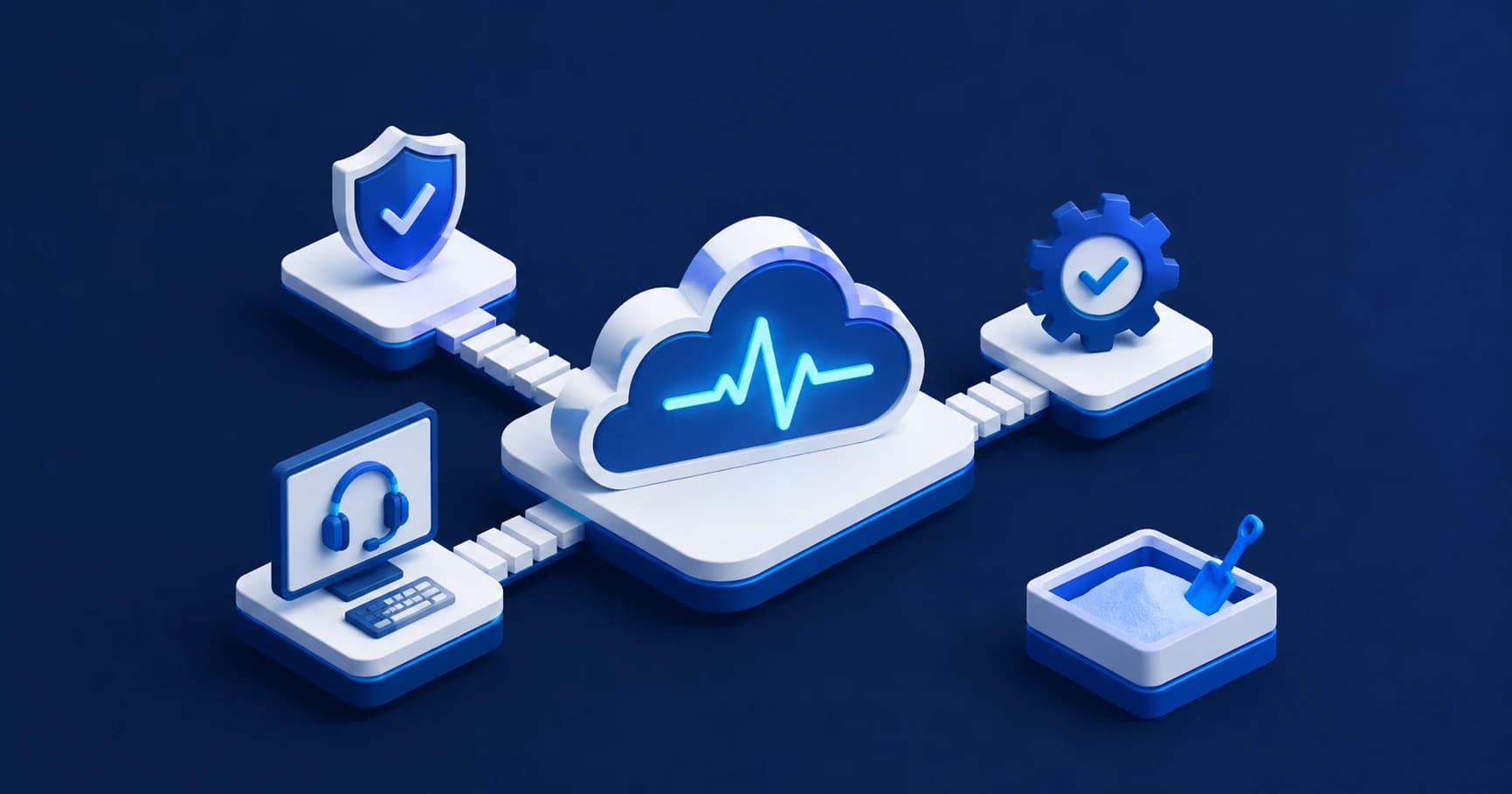
Go-Live tends to get treated as the finish line of an EPM Cloud project. In practice, the weeks and months that follow are what actually determine whether the new system sticks. Part 2 of this series picks up right after launch and covers stabilizing the environment, managing change safely, and keeping governance strong for the long run. If you missed it, Part 1 walks through Discovery, design, build, data migration, and testing.
Hypercare: The Critical First Weeks
Immediately after Go-Live, the project enters what most implementation teams call Hypercare, typically lasting two to four weeks. This phase exists to catch anything that only shows up under real usage: resolving user issues quickly, monitoring system performance, validating that integrations are running as expected, and confirming reporting accuracy against what users saw in the old system.
A well-staffed Hypercare period usually keeps functional consultants, technical resources, and a handful of power users from the business all on standby together, often meeting daily to triage anything new that surfaces. That tight feedback loop is what turns Hypercare into a genuine safety net rather than a formality: small problems get caught and fixed while the team is still fully engaged, instead of quietly becoming workarounds users learn to live with.
The Gold Tenant: A Safe Place to Test Change
Many organizations keep a Gold Tenant environment alongside production: a controlled, template style environment used to test enhancements, validate configuration changes, and run through upgrades before anything touches the live system. A Gold Tenant is what lets an admin team make bold changes with confidence, because mistakes surface in a sandbox instead of in front of end users in the middle of a close.
This matters even more around Oracle's regular update cycles. Testing a new feature or a scheduled patch in the Gold Tenant first, rather than discovering an issue in production, is usually the difference between a smooth monthly update and a support ticket backlog on a Monday morning.
Managing Change Requests
No EPM Cloud application stays static for long. As the business evolves, so do its requirements, and those requests get funneled through a Change Request, or CR, process. Typical CRs include new planning scenarios, additional reports, security adjustments, and new integrations.
A well-run CR process follows a consistent path: impact assessment, design, development, testing, and deployment, so even small changes get the same rigor as the original implementation, just at a smaller scale. Most organizations also build in some form of prioritization, whether that is a simple severity scale or a recurring review with finance leadership, so the backlog gets worked through deliberately instead of growing indefinitely.
Post-Production Support
Once the environment stabilizes past Hypercare, the project moves into ongoing Post-Production Support. This covers monitoring system health, handling user tickets, managing security updates, supporting new reporting requirements as they come up, and implementing the enhancements that come out of the CR process.
Strong support governance here is what separates an EPM Cloud application that keeps delivering value for years from one that quietly degrades because nobody owns it once the project team leaves. That ownership can sit in-house, with an outside partner, or as a shared model between the two, but someone needs clear responsibility for it either way.
Bringing It Together
None of these phases are optional extras. Hypercare, the Gold Tenant strategy, Change Request management, and Post-Production Support are what keep the investment from Part 1 of this series paying off well past Go-Live. Part 3 looks at a different kind of growth: extending your EPM Cloud environment with Financials, Capex, and Projects planning, along with the governance layer, EDMCS and the EPM Agent, that keeps a multi-module environment running smoothly.