
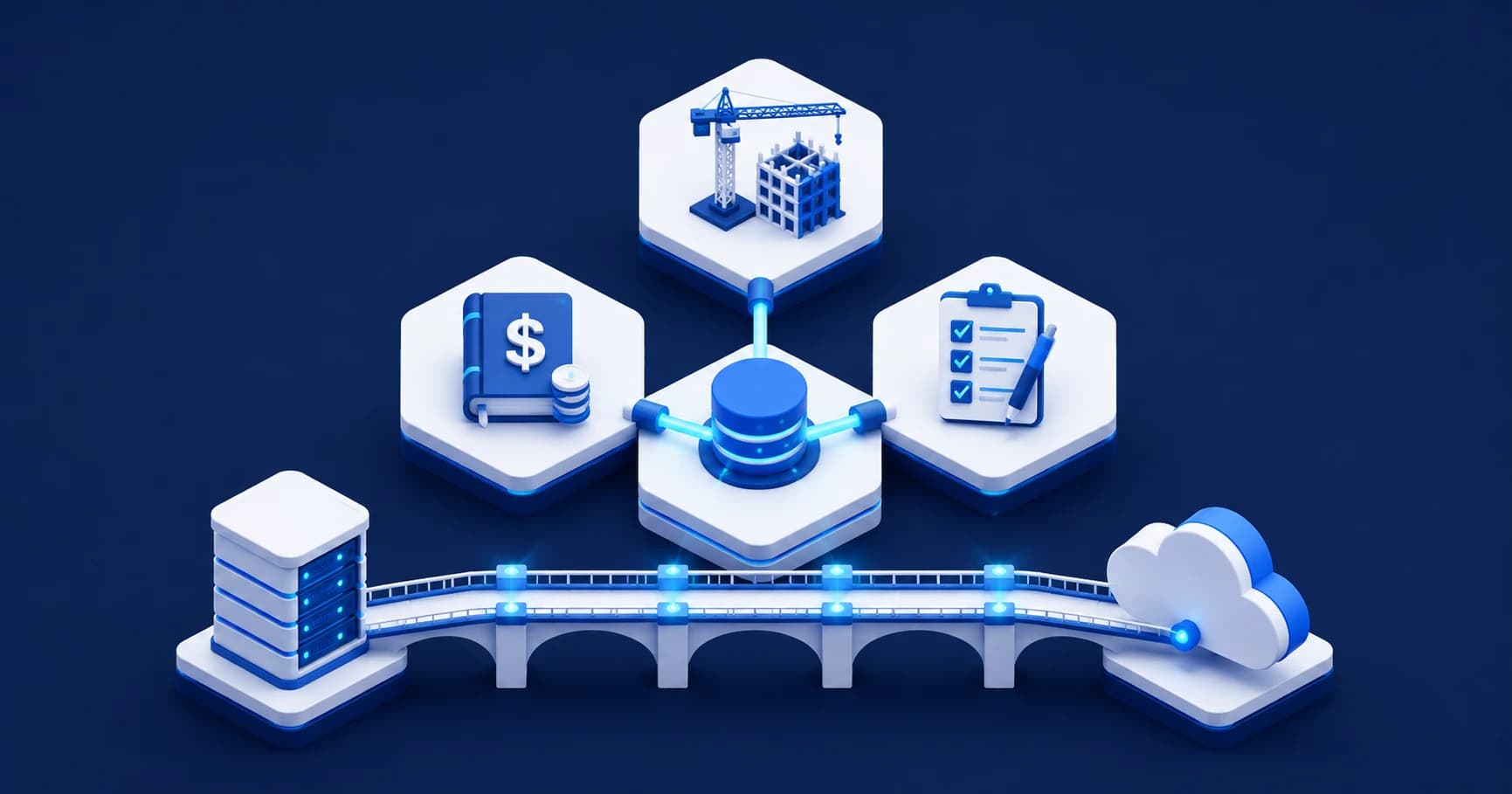
A lot of Oracle EPM Cloud programs start with a single planning model and grow from there. Once Financials, Capital Expenditure, and Projects planning enter the picture, the environment gets a lot more powerful, and a lot more complex. Two components tend to determine whether that complexity stays manageable: Enterprise Data Management Cloud Service, or EDMCS, for governance, and the EPM Agent for integration with systems that live outside the cloud. This is Part 3 of our series on the Oracle EPM Cloud implementation lifecycle. Part 1 covers Discovery through Go-Live, and Part 2 covers Hypercare and ongoing governance.
Financials: Expense and Income Statement Planning
The Financials module supports operational expense planning and income statement forecasting. Implementation typically configures revenue planning models, operating expense planning, workforce-driven expense allocations, driver-based forecasting models, and financial reporting structures tied back to the Chart of Accounts. The core configuration work involves mapping accounts to financial statements, building planning forms by department and Business Unit, writing calculation rules for allocations and forecasts, and applying security roles for planners and approvers. In multi-module environments, Financials often becomes the hub that pulls in inputs from workforce, Projects, and Capex.
Capex: Planning Capital Investments
The Capex module manages the planning and tracking of capital investments such as infrastructure, equipment, or technology assets. Typical configuration includes capital project request forms, asset lifecycle planning, depreciation calculations, capital approval workflows, and mapping assets to the financial statements they affect. Capex earns its keep by integrating directly with Financials, automatically generating depreciation expense, asset additions, and balance sheet impacts, so capital decisions flow straight into the forecast instead of sitting in a separate spreadsheet.
Projects: Tracking Project-Level Financials
The Projects module gives organizations visibility into project-level financials: hierarchies, expense categories, resource and cost planning, and lifecycle tracking, integrated with both Financials and Capex. In practice, Projects planning usually covers start and end dates, budget allocation across periods, resource cost allocations, and expense tracking by project phase. Done well, it turns long-term initiatives from a line item into something finance can actually monitor and forecast.
EDMCS: Keeping Metadata Consistent Across Modules
The more modules you run, the more it matters that everyone works from the same metadata. That is the job of Enterprise Data Management Cloud Service. EDMCS provides centralized governance for enterprise dimensions such as the Chart of Accounts, entities, cost centers, departments, Business Units, and product hierarchies, with master data version control, approval workflows for hierarchy changes, automated metadata synchronization across systems, and full audit tracking of structural changes. In practice, this means when a new department is created in the ERP system, EDMCS can govern that change and push the update out to every connected Oracle EPM application, instead of someone manually keying it into three different systems.
The EPM Agent: Bridging On-Premise and Cloud
Plenty of organizations still run ERP systems on-premise, or keep data inside internal networks that cannot simply be opened up to the internet. The EPM Agent exists for exactly that situation, enabling secure data transfer from on-premise databases, automated integration jobs, both file-based and direct database integrations, and scheduled data loads into planning applications. Common scenarios include loading ERP actuals into Financials planning, pulling project data from project management systems, feeding capital asset information into Capex planning, and synchronizing metadata between the ERP and EDMCS. It acts as a bridge between internal systems and Oracle EPM Cloud, without exposing internal infrastructure to the open internet.
Testing and Go-Live for Multi-Module Environments
Layering Financials, Capex, Projects, EDMCS, and their integrations on top of a core implementation raises the bar for testing. System Integration Testing needs to validate data flow between the ERP, EDMCS, and EPM, capital depreciation calculations, project expense rollups, and financial statement consolidation. User Acceptance Testing needs business users validating planning forms, capital approval workflows, project budgeting, and financial reporting outputs together, not in isolation. The Cutover Plan grows accordingly, adding steps like synchronizing metadata through EDMCS, validating EPM Agent connectivity, finalizing integration schedules, and confirming that depreciation and project calculations tie out before the system goes live.
Governing a Multi-Module Environment Long Term
Once everything is live, long-term governance looks a little different in a multi-module environment: managing hierarchy updates through EDMCS, monitoring integrations through the EPM Agent, reviewing Change Requests for new planning needs across every module, and supporting enhancements through Post-Production Support. Handled well, this is what keeps the whole ecosystem scaling cleanly as the organization grows, instead of turning into a patchwork of workarounds.