
Introduction
During an Oracle FCCS implementation, one of the earliest translation design decisions is determining whether an account should use Historical Rate Override or Historical Amount Override. While the names sound similar, they serve different business purposes. Understanding when to use each can help avoid unexpected translation results and reduce time spent troubleshooting.
In this article, we'll look at how each option works, when to use it, and a scenario where understanding the difference helped resolve a complex consolidation issue.
Understanding Historical Translation in FCCS
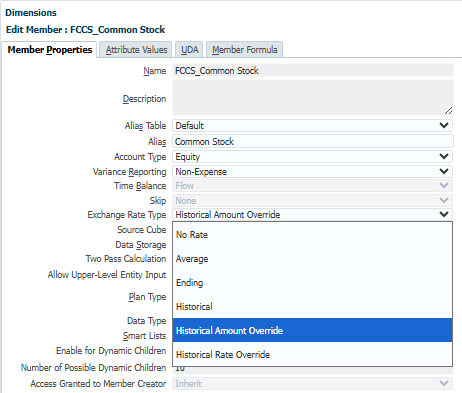
Oracle FCCS allows you to configure an account's Exchange Rate Type based on how its balances should be translated during consolidation.
For accounts that require historical treatment, Oracle provides two options:
- Historical Rate Override
- Historical Amount Override
Both are configured on the Account dimension, but they behave differently during translation.
Historical Rate Override
Choose Historical Rate Override when the business knows the exchange rate that should be used for translation.
FCCS uses the user-entered historical exchange rate instead of the rate that would normally be applied during translation based on the account's configuration.
This approach is useful when accounting policies require balances to be translated using a specific historical exchange rate rather than the current or average rate.
Typical Use Cases
- Equity accounts
- Equity investments
- Accounts requiring a fixed historical exchange rate
Historical Amount Override
Historical Amount Override works differently.
Instead of entering an exchange rate, users enter the translated amount directly. During consolidation, FCCS uses this amount rather than calculating a translated value through the standard currency translation process.
This is useful when the translated amount must remain fixed regardless of future exchange rate movements.
What Happens Behind the Scenes?
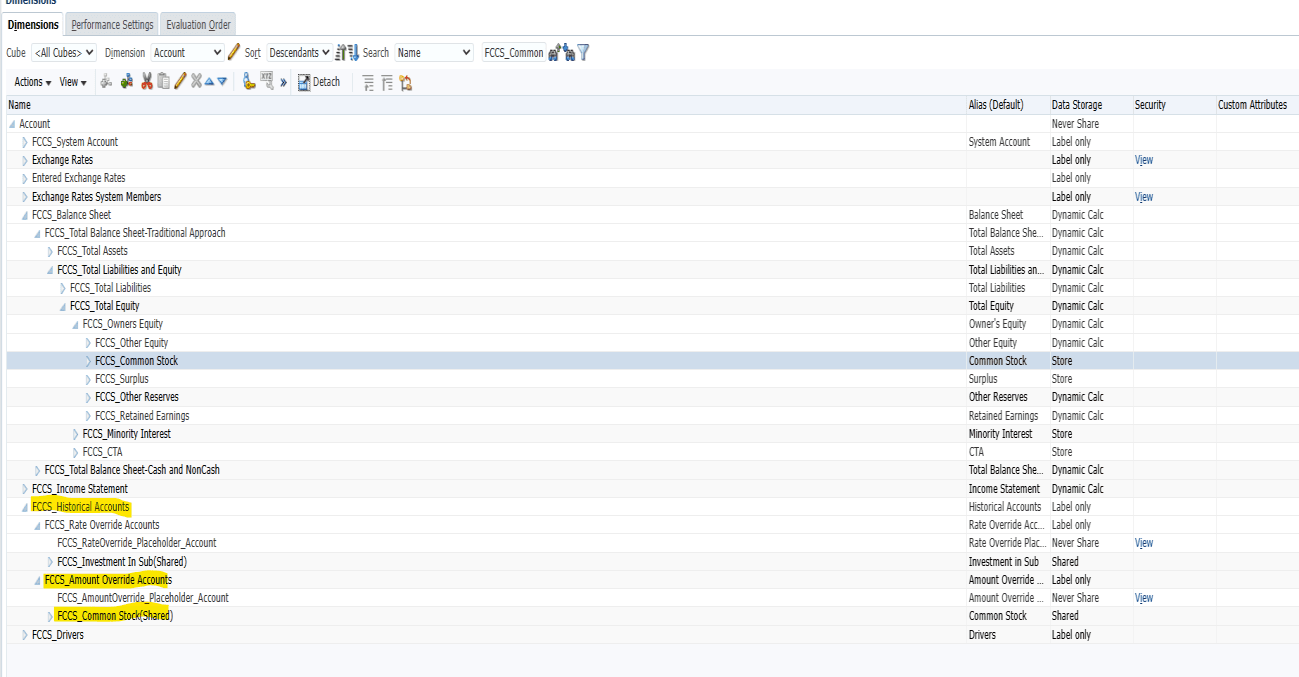
When an account is configured with Historical Rate Override or Historical Amount Override, Oracle automatically creates a shared member under the appropriate override hierarchy. Historical Rate Override accounts appear under FCCS_Rate Override Accounts, while Historical Amount Override accounts appear under FCCS_Amount Override Accounts, allowing users to enter the required override values through the predefined override forms.
Because Oracle generates these override members automatically, administrators don't need to create separate accounts for historical overrides, simplifying ongoing maintenance.
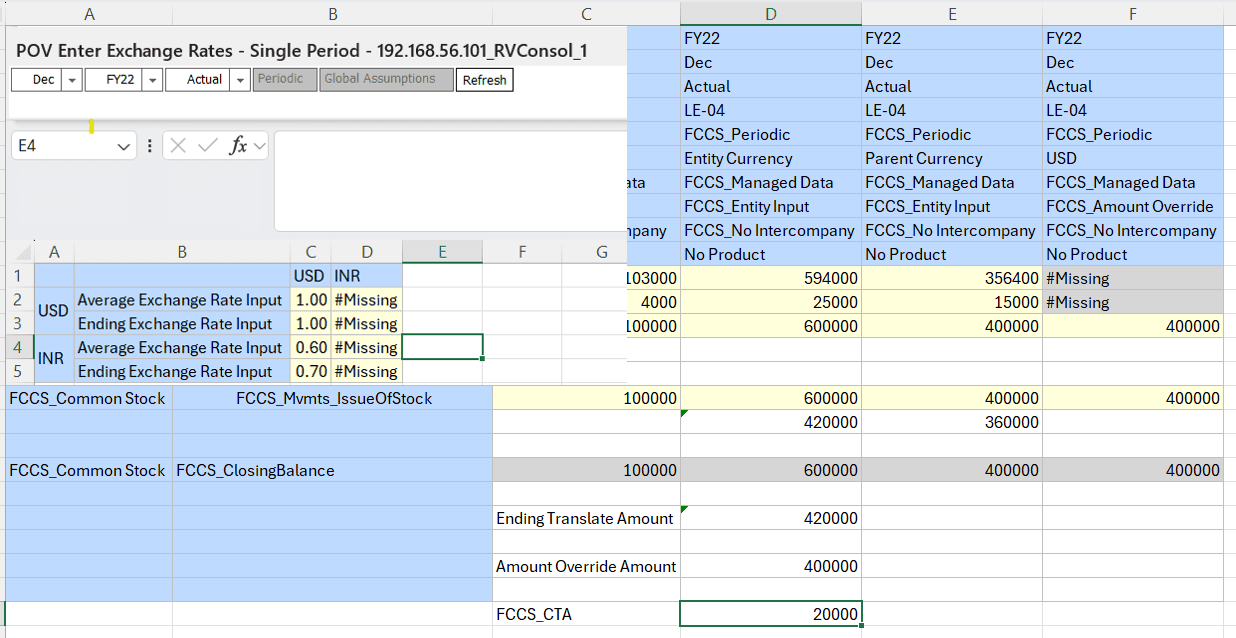
Oracle provides predefined override forms where users enter either historical exchange rates or translated amounts based on the account's Exchange Rate Type.
| Historical Rate Override | Historical Amount Override |
|---|---|
| Users enter a historical exchange rate. | Users enter the translated amount directly. |
| FCCS translates the account using the user-entered historical exchange rate. | FCCS uses the entered translated amount. |
| Suitable when the historical FX rate is known. | Suitable when the translated balance must remain fixed. |
Scenario
During a recent FCCS implementation, we encountered a consolidation issue involving a joint venture rolling into a subsidiary structure. Although the consolidation rules were functioning correctly, the translated balances at the parent level didn't match business expectations.
After reviewing the account configuration, we discovered the issue wasn't in the consolidation logic. It was caused by an incorrect historical translation setup. Once the appropriate override configuration was applied and the consolidation process was rerun, the translated balances aligned with the expected financial results.
Key Takeaways
- Historical Rate Override and Historical Amount Override serve different purposes.
- Historical Rate Override lets FCCS calculate translated values using a user-defined exchange rate.
- Historical Amount Override allows users to enter the translated amount directly.
- Oracle automatically creates shared members under the appropriate override hierarchy (FCCS_Rate Override Accounts or FCCS_Amount Override Accounts), depending on the configured Exchange Rate Type.
- Always verify the account's Exchange Rate Type before troubleshooting translation results.
Common Checks
- Verify the account's Exchange Rate Type.
- Confirm the override values were entered for the correct POV.
- Ensure consolidation and translation have been rerun after entering the override values.
- Verify the account appears under the appropriate Oracle-generated override hierarchy.
Understanding these two translation methods early in an FCCS implementation can save hours of troubleshooting later. When translation results don't match expectations, reviewing the account's Exchange Rate Type is often one of the first places to start.
The examples in this article are based on Oracle FCCS functionality and our consultant's implementation experience. Always refer to the Oracle Financial Consolidation and Close Cloud documentation for version-specific behavior.